Pancit is a beloved Filipino noodle dish known not only for its flavor but also for its deep cultural meaning, especially in celebrations and special occasions.
Pancit is one of the most commonly served dishes in Filipino gatherings, particularly during birthdays and celebrations. Made with noodles, vegetables, and meat or seafood, it is valued not only for its delicious taste but also for the symbolism it carries in Filipino culture.
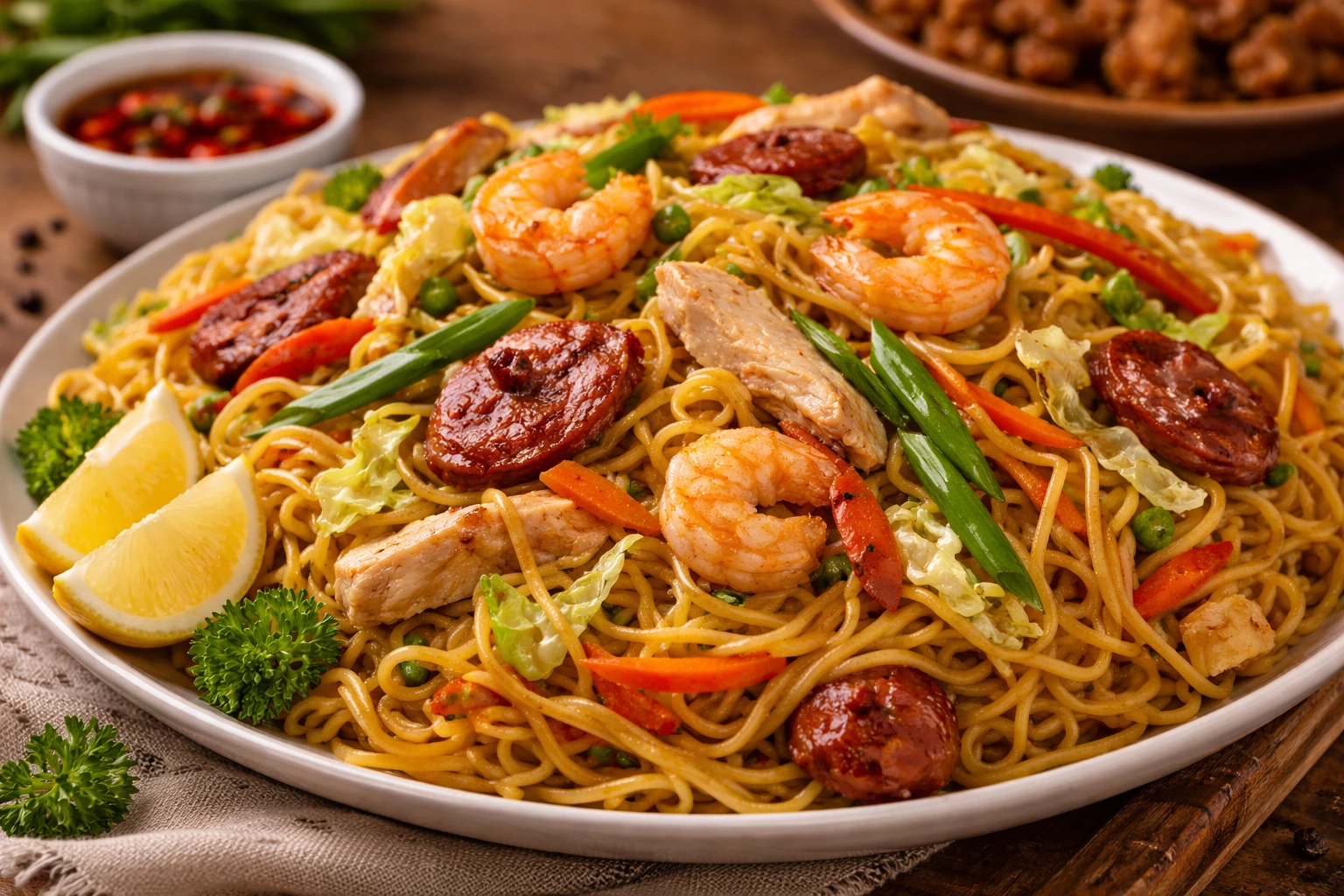
In many Filipino households, pancit is considered a must-have dish during special occasions. Its presence on the table is believed to bring good fortune, long life, and prosperity.
Origin of Pancit
Pancit traces its origins to Chinese cuisine, introduced to the Philippines by Chinese traders centuries ago. The word “pancit” comes from the Hokkien phrase “pian e sit,” which means “something conveniently cooked.”
As the dish was adopted into Filipino culture, it evolved into many different variations using local ingredients and cooking styles. Over time, pancit became an essential part of Filipino cuisine, blending Chinese influence with Filipino taste.
How Pancit Evolved in the Philippines
Pancit has developed into numerous regional variations across the Philippines. Each version reflects local preferences, ingredients, and traditions, resulting in a wide variety of flavors and textures.
From dry noodle dishes to saucy versions, pancit can be customized depending on the occasion and available ingredients. This versatility has made it one of the most adaptable dishes in Filipino cooking.
Meaning of Pancit in Filipino Celebrations
Pancit holds strong symbolic meaning in Filipino culture, especially during birthdays. The long strands of noodles represent long life and good health, making it a traditional dish served to celebrate another year of life.
Because of this symbolism, pancit is rarely absent from birthday celebrations and is often included in menus for other important events. It reflects not only tradition but also the Filipino belief in sharing blessings through food.
Why Pancit Is a Celebration Staple
Pancit is a favorite for gatherings because it is affordable, easy to prepare in large quantities, and enjoyed by many. Its flexibility allows it to be served as a main dish or as a side that complements other Filipino favorites.
In buffet-style catering, pancit is often included because it can serve many guests efficiently while maintaining its flavor and presentation. It is both practical and meaningful, making it a reliable choice for event menus.
Symbolism
Represents long life and prosperity.
Affordability
Budget-friendly and ideal for large groups.
Versatility
Can be adapted to different styles and occasions.
Popular Types of Pancit
- Pancit Canton – stir-fried egg noodles with meat and vegetables.
- Pancit Bihon – thin rice noodles often served during celebrations.
- Pancit Malabon – thick noodles with rich seafood sauce.
- Pancit Palabok – orange-colored sauce with shrimp and toppings.
- Pancit Habhab – a regional specialty eaten without utensils.
Pancit in Catering Events
In catering, pancit is a dependable dish that complements a wide range of menu items. It can be prepared ahead of time and served efficiently, making it suitable for both small and large events.
Its cultural meaning also adds value to the menu, especially for birthday celebrations where its symbolism is widely recognized. Including pancit ensures both practicality and tradition are present in the event.
Final Thoughts
Pancit is more than just a noodle dish—it is a symbol of Filipino culture, tradition, and celebration. From its Chinese origins to its place in modern Filipino gatherings, it continues to bring meaning and flavor to every occasion.
Simple Pancit Bihon Recipe (1 Kilo)
This easy 1 kilo pancit bihon recipe is perfect for small gatherings and can be scaled for larger catering events.
Ingredients
- 1 kg pancit bihon (rice noodles)
- 500 g chicken (shredded or sliced)
- 200 g shrimp (optional)
- 2 tbsp cooking oil
- 4 cloves garlic (minced)
- 1 onion (sliced)
- 2 cups cabbage (shredded)
- 1 cup carrots (julienned)
- 1/2 cup green beans (sliced)
- 4 tbsp soy sauce
- 4–5 cups chicken broth or water
- Salt and pepper to taste
- Lemon or calamansi (for serving)
Instructions
- Sauté garlic and onion in oil until fragrant.
- Add chicken and cook until lightly browned.
- Add shrimp (if using) and cook briefly.
- Pour in broth and soy sauce, then bring to a boil.
- Add pancit bihon and let it absorb the liquid.
- Mix gently until noodles soften.
- Add vegetables and cook until tender.
- Season with salt and pepper to taste.
- Serve with calamansi or lemon.
Complete your celebration with Filipino favorites
Executive Gourmet offers catering packages that include classic dishes like pancit, perfect for birthdays, corporate events, and special gatherings.
View Catering Rates