Discover how adobo became one of the most beloved dishes in the Philippines and why it continues to appear in homes, fiestas, and catering events across the country.
Adobo is often described as one of the most iconic dishes in the Philippines. Known for its rich, savory, and slightly tangy flavor, it is made by simmering meat in vinegar, soy sauce, garlic, peppercorns, and bay leaves. While simple in appearance, adobo carries a deep culinary story that reflects Filipino taste, tradition, and practicality.
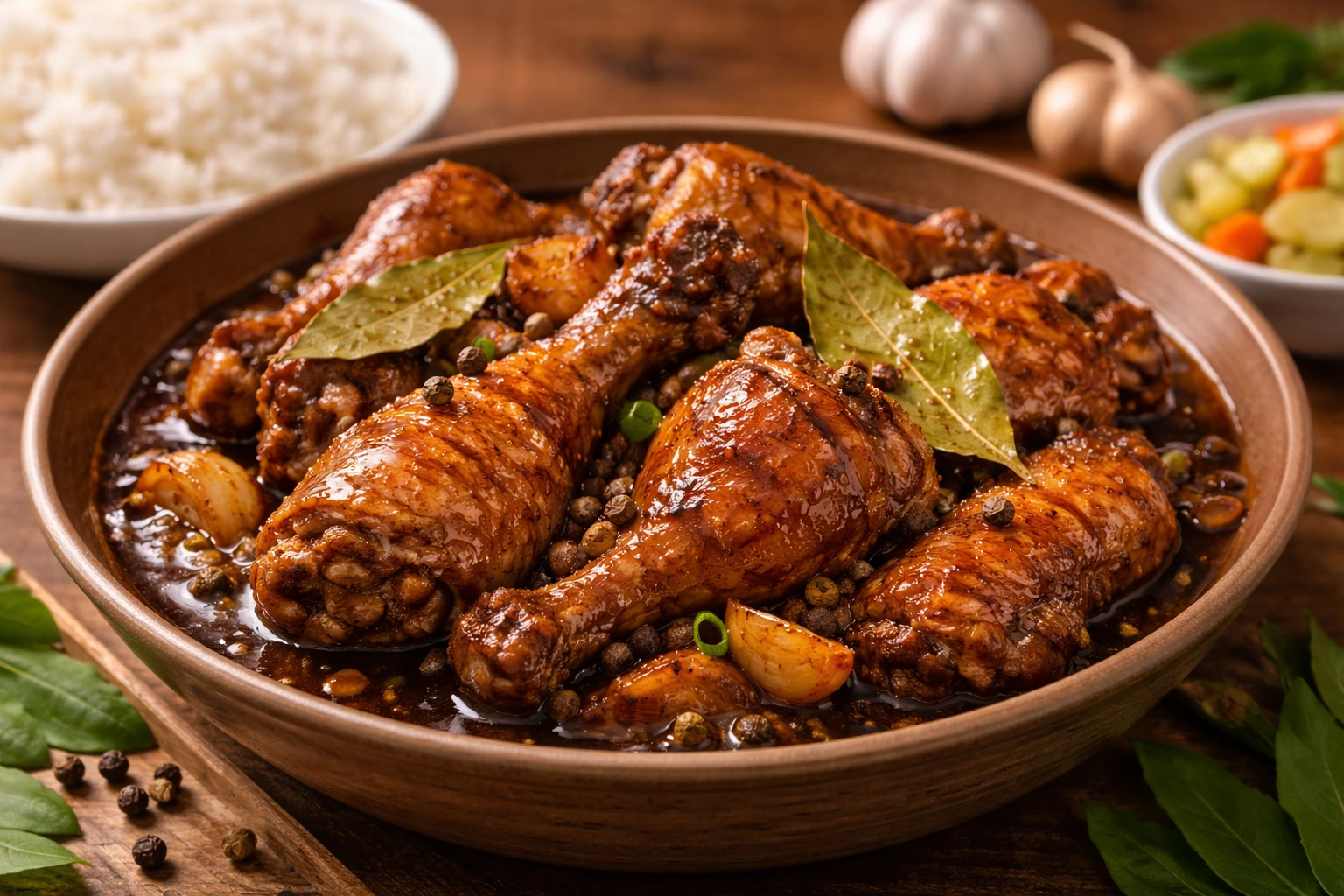
For many Filipinos, adobo is more than just a meal. It is comfort food, a family favorite, and a dish that easily brings back memories of home. Whether served during ordinary lunches, special occasions, or buffet-style gatherings, adobo remains one of the most recognizable and dependable dishes in Filipino cuisine.
Where Did Adobo Originate?
The roots of adobo go back to the pre-colonial Philippines, long before modern refrigeration existed. Early Filipinos used vinegar and salt as natural preservatives to keep food fresh longer in the tropical climate. This method of cooking and preserving meat helped create a dish that was both practical and flavorful.
When the Spanish arrived in the Philippines, they observed this local cooking method and called it adobo, a word that comes from the Spanish term meaning marinade or seasoning. Although Spanish adobo refers to a different preparation, the name remained attached to the Filipino version. Over time, Filipino adobo developed its own strong identity and became a dish unlike any other.
How Adobo Evolved in the Philippines
As Filipino cooking traditions grew, adobo evolved into many regional and household variations. Some families prefer chicken adobo, while others favor pork adobo. Some like it saucy, while others cook it down until the sauce becomes thick and concentrated. There are even versions with coconut milk, turmeric, sugar, or chili, depending on local taste and family tradition.
This flexibility is one reason why adobo has remained so popular for generations. It can be adjusted to suit different budgets, tastes, and occasions while still keeping its familiar Filipino identity. No two households prepare it exactly the same way, which makes adobo both personal and universally loved.
Why Adobo Became a Filipino Staple
Adobo became a staple dish because it is practical, delicious, and easy to prepare in large or small quantities. The combination of vinegar, garlic, and seasonings gives it a strong flavor that lasts well, making it ideal for family meals and food service alike. It is also a dish that often tastes even better after resting, as the meat absorbs more of the sauce over time.
In many Filipino homes, adobo is one of the first dishes learned in the kitchen because of its simple method and dependable results. It is hearty enough for everyday meals, yet flavorful enough to serve during gatherings and celebrations.
Why Adobo Works Well for Catering
Adobo is also a strong choice for catering because it holds its flavor well and can be prepared in bulk without losing its appeal. Unlike some dishes that are best served immediately, adobo remains enjoyable even after some time on a buffet table. This makes it a practical and crowd-friendly option for parties, corporate events, birthdays, and family celebrations.
Its familiar taste also makes it a safe and comforting choice for guests of different ages. For many event hosts, including adobo in the menu adds a classic Filipino dish that guests immediately recognize and appreciate.
Flavor
Savory, tangy, rich, and deeply satisfying.
Practicality
Easy to prepare in batches and suitable for buffet service.
Popularity
A familiar Filipino favorite for both casual meals and special events.
Popular Variations of Adobo
Over the years, many versions of adobo have appeared across the Philippines. Some of the most common include:
- Chicken Adobo – a classic and widely loved version with tender chicken simmered in a savory sauce.
- Pork Adobo – richer and more indulgent, often chosen for its deeper flavor.
- Adobong Puti – a lighter-looking version that relies more on vinegar and salt than soy sauce.
- Adobo sa Gata – adobo cooked with coconut milk for a creamier and slightly richer finish.
- Spicy Adobo – a version with chili for those who enjoy added heat.
Adobo in Filipino Culture
Adobo continues to hold a special place in Filipino culture because it reflects both tradition and adaptability. It is a dish that can be served in humble homes, featured in restaurants, or included in elegant catering menus. Its long history and familiar taste have made it a symbol of Filipino cooking that is recognized both locally and internationally.
For many people, adobo represents the heart of Filipino food: simple ingredients transformed into something deeply flavorful, comforting, and memorable.
Final Thoughts
The story of adobo is the story of Filipino resourcefulness, taste, and tradition. From its roots as a practical preservation method to its place today as a beloved national favorite, adobo remains a dish that connects generations through flavor and memory. Whether enjoyed at home or served at a special event, it continues to stand as one of the most enduring icons of Filipino cuisine.
Simple Chicken Adobo Recipe (1 Kilo)
This easy 1 kilo chicken adobo recipe is perfect for home cooking and can be scaled for catering events.
Ingredients
- 1 kg chicken (cut into serving pieces)
- 1/2 cup soy sauce
- 1/2 cup vinegar
- 1 cup water
- 5 cloves garlic (crushed)
- 2–3 bay leaves
- 1 tsp whole peppercorns
- 1 tbsp cooking oil
- 1 tsp sugar (optional)
- Salt to taste
Instructions
- Combine chicken, soy sauce, and garlic. Marinate for at least 30 minutes.
- Heat oil in a pan and lightly brown the chicken.
- Add marinade, water, bay leaves, and peppercorns.
- Bring to a boil, then lower heat and simmer for 25–30 minutes.
- Add vinegar without stirring and simmer for another 10 minutes.
- Stir, then season with sugar and salt if needed.
- Continue cooking until sauce thickens.
- Serve hot with rice.
Planning an event with classic Filipino dishes?
Executive Gourmet offers catering options that bring together well-loved Filipino favorites for weddings, birthdays, corporate events, and family gatherings.
View Catering Rates