Lechon is one of the most iconic dishes in the Philippines, known for its crispy skin, flavorful meat, and strong presence in major celebrations and gatherings.
Lechon, or roasted whole pig, is widely regarded as the centerpiece of Filipino feasts. Its golden, crispy skin and tender, juicy meat make it one of the most anticipated dishes at weddings, fiestas, birthdays, and other large events. More than just food, lechon represents celebration, abundance, and tradition.
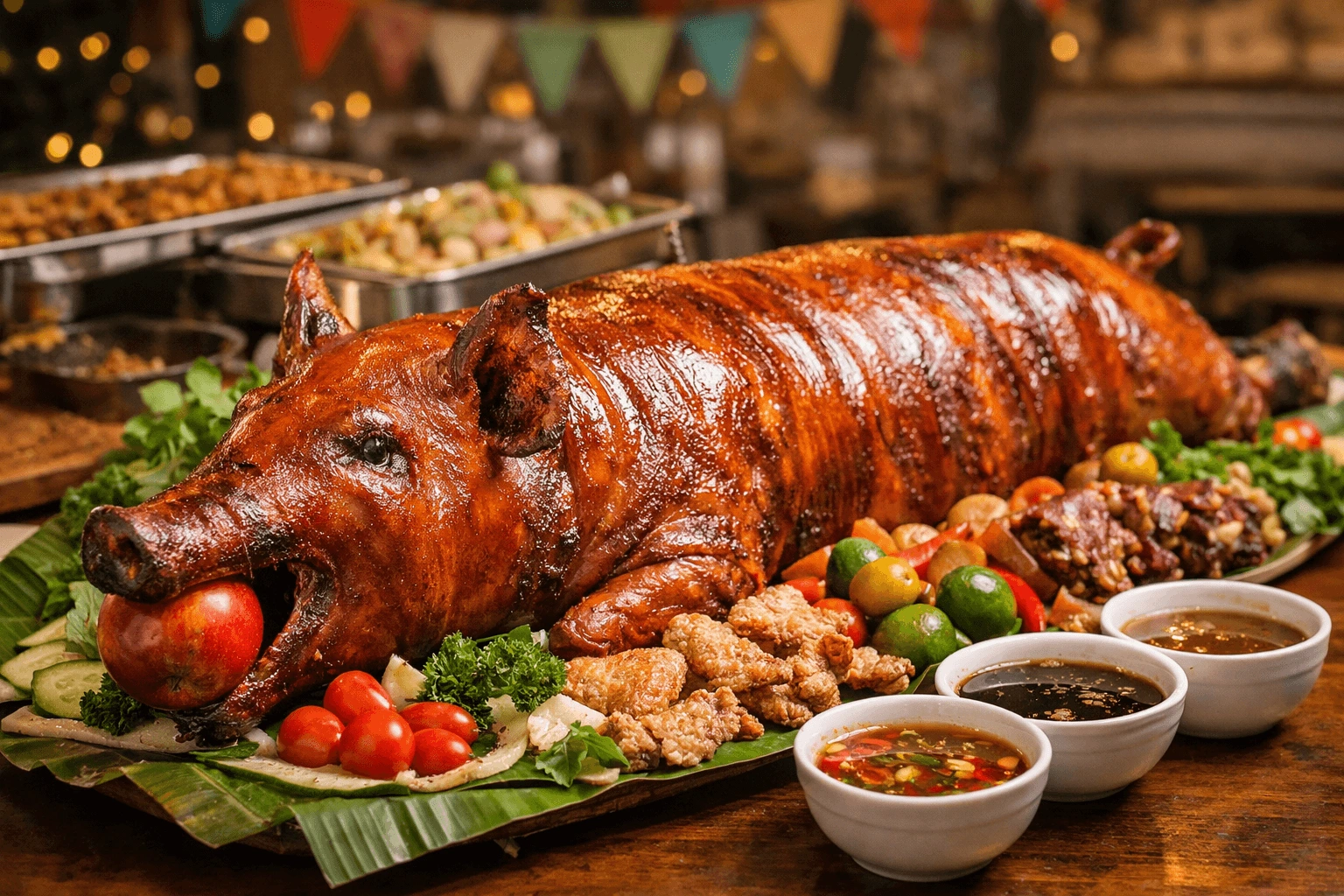
In many Filipino gatherings, the presence of lechon signifies a special occasion. It is often placed at the center of the table, highlighting its importance as a symbol of hospitality and festivity.
Origin of Lechon
The tradition of roasting whole animals can be traced back to Spanish colonial influence in the Philippines. The word “lechon” itself comes from the Spanish term for roasted suckling pig. During the Spanish era, this cooking method was introduced and eventually adopted by Filipinos.
Over time, Filipinos developed their own version of lechon, incorporating local spices, herbs, and techniques. What started as a colonial influence evolved into a uniquely Filipino culinary tradition that is now deeply embedded in the country’s culture.
How Lechon Evolved in the Philippines
Filipino lechon has evolved into several regional styles, each with its own unique flavor profile. Some regions focus on heavily seasoned meat, while others emphasize crispy skin and natural flavors. The preparation often involves stuffing the pig with herbs, spices, and aromatics before slow roasting it over charcoal.
The cooking process requires skill and patience, as the pig must be rotated evenly to achieve the perfect balance of crispiness and tenderness. This craftsmanship has made lechon not only a dish but also a culinary tradition passed down through generations.
Cultural Significance of Lechon
Lechon holds a special place in Filipino culture as a symbol of celebration and prosperity. It is often reserved for important occasions, making it a highlight of events where family and friends gather. Serving lechon is seen as a gesture of generosity and pride, reflecting the host’s desire to provide the best for their guests.
Because of its size and preparation, lechon naturally becomes the focal point of any feast. It is often the dish that guests look forward to the most, making it an essential part of traditional Filipino celebrations.
Why Lechon Is Perfect for Celebrations
Lechon is ideal for large gatherings because it can serve many people and creates a sense of occasion. Its presentation alone adds excitement and visual appeal to the event, while its rich flavor satisfies a wide range of tastes.
It is commonly featured in weddings, fiestas, corporate events, and milestone celebrations, where it serves as both a main dish and a centerpiece that enhances the overall dining experience.
Presentation
A striking centerpiece that elevates any event.
Flavor
Crispy skin and juicy meat loved by many.
Tradition
A symbol of Filipino celebration and abundance.
Lechon in Catering Events
In catering, lechon is often offered as a premium option due to its preparation and presentation. It can be served whole for visual impact or chopped into portions for easier distribution among guests. Its presence adds a level of prestige and excitement to any event menu.
Many catering providers include lechon as part of special packages for weddings and large celebrations, ensuring that guests experience one of the most iconic dishes in Filipino cuisine.
Final Thoughts
Lechon remains one of the most celebrated dishes in the Philippines, representing tradition, craftsmanship, and the joy of gathering together. From its historical roots to its role in modern celebrations, it continues to be a symbol of Filipino hospitality and festive spirit.
Simple Lechon Belly Recipe (1 Kilo)
This easy lechon belly recipe is a practical alternative to whole lechon, perfect for small gatherings and scalable for catering events.
Ingredients
- 1 kg pork belly (skin on)
- 4 cloves garlic (crushed)
- 1 tbsp salt
- 1 tsp ground pepper
- 2 stalks lemongrass (optional)
- 2 bay leaves
- 1 onion (quartered)
- Aluminum foil
Instructions
- Score the skin of the pork belly and pat dry.
- Rub salt and pepper evenly over the meat.
- Place garlic, onion, bay leaves, and lemongrass inside.
- Roll the pork belly tightly and secure with string.
- Wrap in foil and roast at 180°C for 1.5–2 hours.
- Remove foil and increase heat to crisp the skin.
- Roast until skin is golden and crispy.
- Let it rest before slicing and serving.
Make your celebration unforgettable
Executive Gourmet offers catering options that include classic Filipino favorites like lechon, perfect for weddings, fiestas, and special occasions.
View Catering Rates